Jules Verne
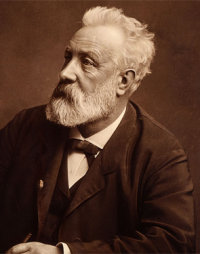
Considerat a fi un vizionar, Jules Verne este apreciat pentru operele sale cu privire la viitorul omenirii, calatorii in spatiu si in adancul marilor. Scriitor francez de origine, si in aceelasi timp un visator incurabil, Verne este un fabulos precursor al genului Science-Fiction in literatura universala.
Copilarie
1828-02-08 Jules Gabriel Verne (Jules Verne) s-a nascut la Nantes,ca fiu al procurorului Pierre Verne și al sotiei sale, Sofia. Fiind cel mai mare din cei cinci copii ai familiei, el si-a petrecut copilaria acasa cu parintii sai, pe o insula vecina cu Raul Loara.
1837 La varsta de 9 ani, a fost trimis la scoala, la Liceul Nantes. Jules a studiat aici latina, pe care ulterior o va folosi in romanele sale.
1839 Se va imbarca pe un vas care ducea marfa catre India, dar tatal sau il prinde si il aduce acasa , punandu-l solemn sa promita ca nu va mai incerca niciodata sa fuga de acasa. Prima aventura este soldata cu un esec total. Dupa ce a terminat studiile de la liceu, Verne a plecat la Paris, pentru a-si continua studiile.
Debutul literar
1847 Este trimis la Paris pentru a urma cursurile Facultatii de Drept insa tanarul Jules Verne nu avea inclinatii spre drept, ci spre literatura si era caprivat de calatorii. Cand tatal lui Jules Verne a aflat ca fiul sau scria si compunea mai mult decat invata pentru Drept, i-a intrerupt sprijinul financiar.
1848 Impreuna cu Michel Carre, a inceput sa lucreze la operele literare.
1851 Ii apare romanul O drama in vazduh .
1854 Apare Maestrul Zacharias sau ceasornicarul care si-a pierdut sufletul .
1855 Apare romanul O iarna printre ghetari
Maturitate
1857-01-10 Cea mai mare realizare pe plan personal a lui Jules Verne a fost casatoria sa cu Honorine de Viane Morel, o vaduva cu două fiice. Ajutat de optimismul si incurajarile ei, Jules Verne a continuat sa scrie si sa caute activ un editor ce ar fi putut sa-i publice cartea. Avand o familie de intretinut, el a sacrificat teatrul si literatura pentru un venit lunar sigur, angajandu-se ca agent de bursa la Paris, desi ura aceasta meserie din toata inima.
1859 Scrie Calatorie in Anglia si in Scotia.
1860 Lucreaza la romanul Parisul in secolul al XX-lea.
1861-08-04 S-a nascut primul sau baiat, Michel Jean Pierre Verne, un copil teribil asa cum avea sa-l numeasca tatal sau; acesta avea sa il faca pe Jules Verne bunic de doua ori.
1862 Anul in care lucreaza la romanele Contele de Chanteleine si Cinci saptamani in balon.
1863 Anul care avea sa-l marcheze pe Jules Verne : il va cunoaste personal pe editorul francez Pierre-Jules Hetzel. Un editor foarte important al vremii care avea multe relatii si care putea sa-l lanseze pe culmea gloriei. Ceea ce va face : Hetzel va fi editorul favorit al lui Verne iar Verne scriitorul preferat al lui Hetzel. Aceasta relatie va continua pana la moartea lui Hetzel , in 1886.
1864 Apare O calatorie catre centrul Pamantului. Un nou roman captivant marca Jules Verne, aparut ca urmare a intalnirii cu editorul Pierre-Jules Hetzel.
1864 - 1867 Un nou roman al lui Jules Verne : Capitanul Hatteras. Un roman pentru care se documenteaza foarte bine si petrece mult timp in biblioteca.
1865 Apare romanul De la Pamant la Luna.
1866 - 1868 Lucreaza la un nou roman : Copiii Capitanului Grant, roman publicat in doua volume.
1867 Se imbarca cu fratele sau, Paul Verne, la bordul unei nave de croaziera care pleaca spre America.
1869 Lucreaza la romanele : 20.000 de leghe sub mari, In jurul Lunii, Un oras plutitor. Un an extrem de bun pentru Verne.
1870 Romanul Unchiul Robinson,publicat postum abia in anul 1993. Tot in acest an apar Aventurile a trei rusi si trei englezi in Africa Australa.
1870 - 1874 Insemnarile calatorului pe mare . Un roman de aventura , purtand semantura inegalabilului Jules Gabriel Verne.
1871 Se muta la Amiens, in orasul natal al sotiei sale.Va indragi acest orasel de provincie si va ramane aici pana la moarte.
1871 Scrie Ocolul pamanatului in 80 de zile.
1871 - 1872 Tinutul Blanurilor semnat Jules Verne, roman aparut in doua volume.
1872 Apare romanul Ocolul lumii in 80 de zile care va fi bine primit de public.
1873 Apare unul dintre cele mai cunoscute romane ale sale Ocolul Pamantului in 80 de zile, ecranizat si dovedindu-se un adevarat succes.
1873 - 1875 Lucreaza la Insula Misterioasa, publicat in doua volume.
1874 - 1876 Lanseaza un nou roman : Hector Servadac.
1876 Incepe in forta cu un nou roman : Spargatorii blocadei.
1876 - 1877 Jules Verne are in plan un nou roman la care lucreaza : Indiile negre.
1878 Capitan la cincisprezece ani semnat Jules Verne. Un succes primit foarte bine de publicul sau, urmat de 500 de milioane ale Begumiei, Supravietuitorii Cancelarului si Casa cu aburi. Un an bogat din punct de vedere editorial.
1878 - 1833 Verne navigheaza de la Alger in Scotia, mai apoi in Norvegia. Era nelipsit de carnetelul sau de calatorie in care isi nota toate detaliile, peripetiile si mai ales lucrurile care il uimeau.
1879 In lipsa, dar sub ingrijirea editorului sau, ii apare romanul Aventurile unui chinez in China.
1880 Un nou roman purtand semnatura lui Jules Verne este lansat : 800 de leghe pe Amazon.
1881 Sunt lansate alte doua romane : Scoala Robinsonienilor si Raza Verde, semnate tot Jules Verne.
1882 Apare romanul Keraban Incapatanatul, inspirat de o patanie din timpul calatoriei in Alger.
1883 Mai apar inca doua romane : Steaua Sudului si Arhipelagul in flacari. Se reintoarce din calatorie cu destul material pentru a incepe alte proiecte destul de indraznete.
1883 - 1884 Lucreaza la romanul Mathias Sandorf.
1884 Epava Cynthiei, un nou roman semnat Jules Verne.
1884 Prima croaziera alaturi de sotia sa, Honorine, pe Mediterana.
1885 Un alt an deosebit de important in cariera scriitorului. Ii apar inca trei romane : Un bilet de loterie, Drumul Frantei si Robur cuceritorul.
1885 - 1886 Lucreaza la romanul Nord contra Sud .
1886 Cade victima nepotului sau, care il impusca accidental cu un revolver in picior motiv pentru care va schiopata tot restul vietii sale si va fi nevoit sa poarte un baston.
1886 - 1887 Publica un nou roman Doi ani de vacanta.
1886-03-17 Moare editorul sau, Pierre-Jules Hetzel. O pierdere imensa pentru Jules Verne atat pe plan profesional cat si ca prieten.
1888 Jules Verne devine consilier municipal in Amiens, prima sa functie de conducere. Acest lucru insa nu il va face sa renunte la pasiunea sa pentru scris.
1888 Publica romanele Familia fara nume si Intamplari neobisnuite.
1889 Cesar Cascabel, un roman semnat Jules Verne.
1890 Jules Verne publica Doamna Branican.
1891 Ii apare romanele Prichindel si Claudius Bombarnac.
1892 Publica romanul Uimitoarele peripetii ale Jupanului Antifer .
1893 Insula cu elice si O tragedie in Livonia, apar sub semnatura scriitorului Jules Verne.
1894 Minunatul Orinoco , romanul semnat Jules Verne.
1895 Incredibilul scriitor Jules Verne lanseaza roman dupa roman : Clovis Dardentor, In fata steagului, Sfinxul ghetarilor vol I si II.
1896 Pana lui Jules Verne parca nu se opreste din scris , apar inca doua romane : A doua patrie si Satul aerian.
1897 Testamentul unui excentric apare spre deliciul pasionatilor de lectura.
1897 - 1898 Lucreaza la romanul In Magellania.
1898 Apar romanele Secretul lui Wilhelm Storitz si Fratii Kip.
1899 Trei noi romane scrise de Verne : Burse de calatorie, Castelul din Carpati si Inchipuirile lui Jean-Marie Cabidoulin .
Ultimii ani
1901 Doua noi romane semnate Jules Verne, Farul de la capatul Pamantului si Pilotul de pe Dunare.
1902 Apare romanul Invazia marii.
1902 - 1903 Lucreaza la romanul Stapanul lumii, chiar daca sanatatea i se agraveaza.
1903 Starea sanatatii sale se inrautateste, i se descopera diabet si apare o sacaitoare cataracta.
Sfarsitul
1905-03-24 Jules Verne s-a stins din viata la Amiens. Avea 77 de ani ; se stinge in urma unei crize de diabet. Este inmormantat cu toate onorurile in orasul Amiens (care i-a fost casa peste trei decenii) in cimitirul Madeleine.